
2026–27 National Aviation Assets program
The National Aerial Firefighting Centre is pleased to announce the 2026–27 National Aviation Assets program.
The National Aerial Firefighting Centre (NAFC) is pleased to announce the 2026–27 National Aviation Assets (NAA) program, which brings together a diverse fleet of specialised aircraft and operators, each playing a critical role in supporting aerial firefighting and broader emergency response across Australia. As seasonal risk becomes more complex and variable, nationally coordinated aviation capability continues to play a critical role in supporting rapid, flexible response across jurisdictions.
From large air tanker and birddog platforms through to multi-role helicopters, the capability is designed to deliver the right asset for the right task, when and where it is needed.
This program continues to be a significant addition to NAFC’s national fleet of approximately 170 aircraft, procured from highly experienced Australian companies for the benefit of Australia’s state and territory agencies.
Amongst the NAA fleet for 2026-27 season, the introduction of the Bell Helicopter Textron 214ST marks a significant addition. Operated by McDermott Aviation and based in Cooroy, Queensland, the 214ST is a highly versatile aircraft capable of both aerial firefighting (tank or bucket operations) and multi-role support, including personnel transport, evacuation, and both internal and external cargo resupply. Its ability to carry up to 18 personnel (with reconfiguration) and lift substantial sling or long-line loads positions it as a valuable all-rounder asset, particularly in complex or remote operations.
While the 214ST stands out for its flexibility, it complements the strength of the broader fleet. Coulson Aviation continues to supply the National Large Air Tanker (NLAT) aircraft and accompanying Birddog (NLEAD/Birddog), both of which are based in Richmond, NSW. The NLAT C-130Q provides large-scale retardant delivery, whilst the Birddog Cessna Citation 550 supports aerial supervision and coordination and can assist with transport and evacuation efforts where required.
The 2 UH-60L Blackhawks provided by Aerotech Helicopters deliver powerful external load capability for sling operations. This season, one will be based in Albury, Victoria and the other in Parafield, SA. Together, these assets form a balanced national availability that integrates fixed-wing and rotary assets to meet a wide range of operational demands.
Importantly, this NAA fleet is enabled through Australian Government funding, ensuring that states and territories have access to nationally coordinated aerial support when required. This national investment underpins surge capacity, interoperability, and consistency in service delivery across jurisdictions.
At the centre of this coordination is the AFAC National Resource Sharing Centre (NRSC). The AFAC NRSC play a key role in ensuring aircraft are tasked effectively and deployed where they can have the greatest impact. By managing allocation, prioritisation, and cross-jurisdictional support, the AFAC NRSC helps maximise the value of the fleet and ensures a coordinated national response to emerging incidents.
Overall, the addition of the Bell 214ST enhances an already capable and collaborative national fleet, strengthening flexibility on the ground and in the air, while reinforcing the effectiveness of Australia’s nationally coordinated aerial firefighting capability. This ongoing investment ensures agencies are better equipped to respond to evolving risk and protect communities across Australia.
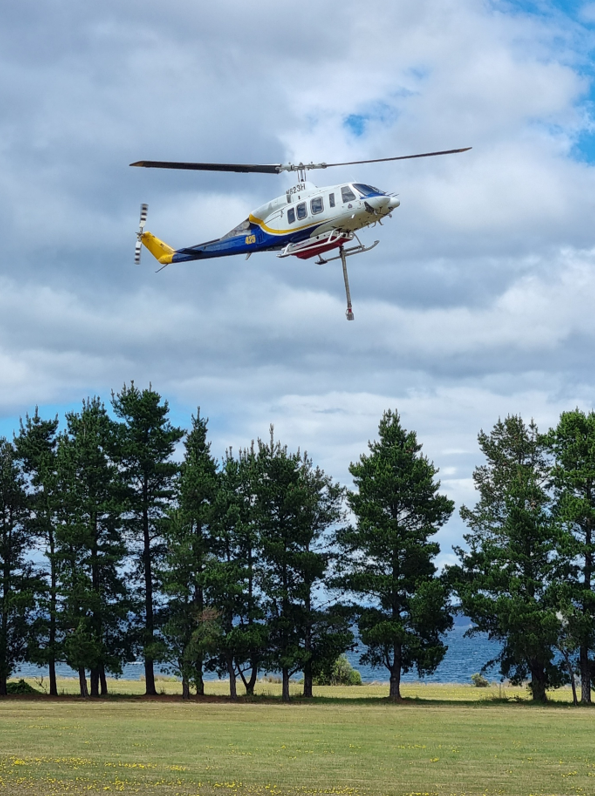
Source: Andelys Bayne, NAFC
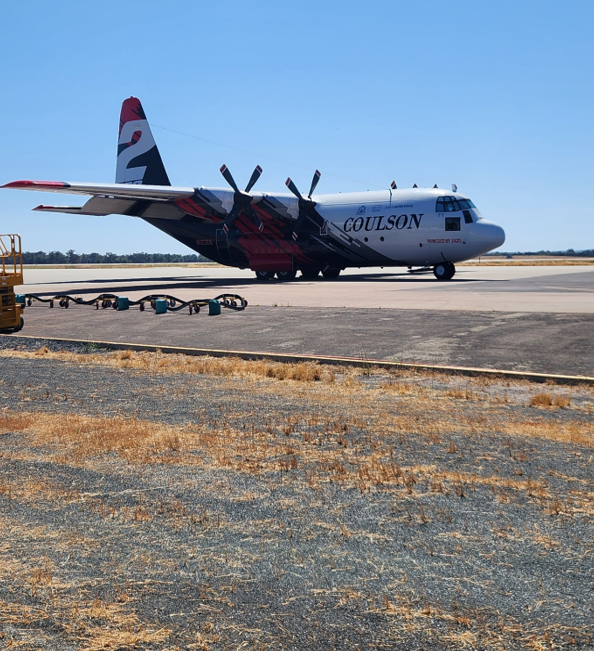
Source: Josephine Stirling, NAFC
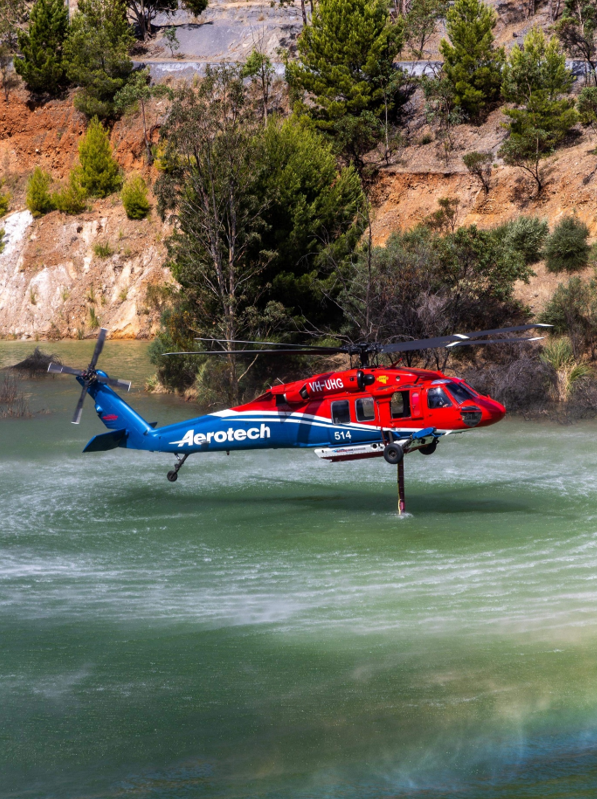
Source: Aerotech, 2024