
United Nations Global Fire Management Hub Working Group – International Interoperability
The United Nations Global Fire Management Hub has initiated working groups that were endorsed at the plenary conference held in June 2025. One of these working groups, the International Interoperability Working Group, met for the first time in Freiburg, Germany on 7-8 October 2025.
During the June United Nations (UN) Global Fire Management Hub Plenary Conference held in Rome, 3 priority areas were identified where gaps currently exist: community-based fire management, data, and international interoperability. If addressed, the 3 priority areas could improve global capability.
Sponsored by the Forestry Division of the Food and Agriculture Organisation (FAO) of the UN, 3 working groups were developed to provide options, strategies and tools to help agencies around the world better prepare for, respond to, and recover from major fire events, focused on the 3 identified areas.
I had the pleasure of attending the inaugural meeting of the International Interoperability Working Group held in Freiburg, Germany on 7-8 October 2025.
The first day of the meeting involved presentations from attendees on their most recent fire season as well as their current initiatives or projects. Dr Israr Albar, Deputy Director of Fire Suppression for the Ministry of Forestry, Indonesia, spoke about the development of satellite tracking for fires and the measurement of area burnt across all the Indonesian islands. Israr spoke about smoke modelling and the work the Ministry of Forestry were doing to identify and manage peat fires.
Elena Hernández, Head of Service of the Forest Fire Defense Area, Ministry for Ecological Transition and the Demographic Challenge, Spain, spoke about the significant fire season Spain has recently experienced. She highlighted that Spain’s 2025 summer had the second highest number of heat wave days, following 2022 with 33 days (1 in 3) reaching heat wave conditions.
Elena indicated that previous exercises and exchange programs, along with pre-positioned capability, were huge benefits when the time came to engage international capability. There were many other useful and informative presentations from the diverse group of international participants both in-person and online.
Day 2 focused on the purpose of the International Interoperability Working Group, understanding the work that had already been done in this space, and where the group might be able to direct efforts to make a difference. Everyone agreed that the climate has already changed and fire behaviour has shifted globally. There are already many agreements that support international resource sharing, including cross boarder Memoranda of Understanding, agreements based on regional geographic areas such as the European Union, Association of Southeast Asian Nations, and the Western Balkans and mutual aid agreements such as the ones that Australia and New Zealand have with Canada and the United States.
Where agreements already exist, there is an element of mutual understanding of incident management structures, roles and local operating procedures that ensure the capability being shared is effective and efficient.
The group also recognised that with the changing climate and conditions, our current partners might be overwhelmed or unavailable. The group identified several key areas that could assist if countries had to establish resource sharing with countries that they did not already have agreements with.
The next steps will involve the FAO finalising the Community Working Group, which will encompass a range of subject matter experts, diverse perspectives and knowledge. Over the next year the working group will work to develop strategies, tools, and guidelines to assist countries, ensuring any capability deployed internationally is in the best position for success.
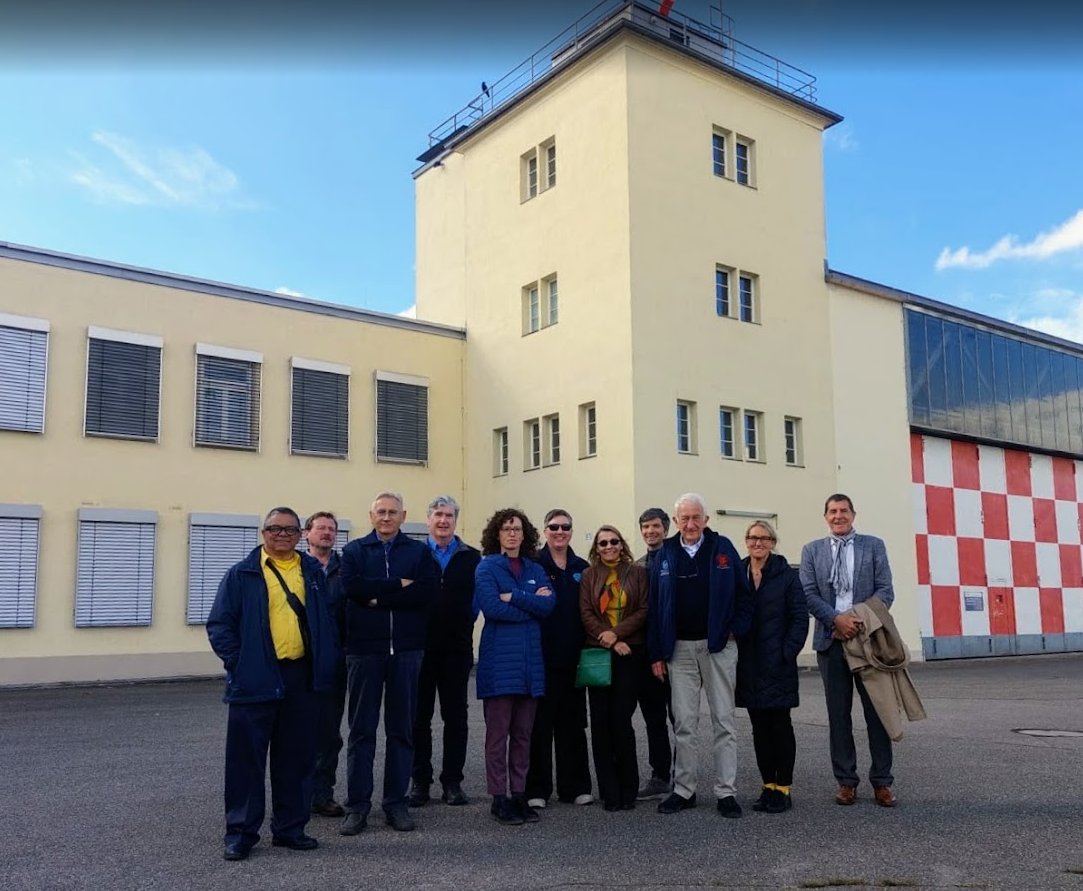
Source: FAO/Lara Steil.
Caption: International Interoperability Working Group visit to Global Fire Monitoring Centre, Freiburg.