
National resource coordination supports Australia’s summer bushfire response
The AFAC National Resource Sharing Centre has been continually active since before Christmas, coordinating 2 deployments to WA and has coordinated over 500 people from across the country to support Victoria.
In late 2025, Australia’s higher-risk weather season made its presence known as multiple fires started across the country. On 17 December 2025, the AFAC National Resource Sharing Centre (NRSC) was activated as WA authorities called for assistance in fire suppression operations.
A total of 27 emergency management personnel were deployed to support WA, comprising 25 members from the SA Country Fire Service (SACFS) and 2 representatives from Fire Rescue Victoria providing deployment support in incident management teams and crew roles over the 5‑day deployment.
Following this, a second deployment of 27 personnel was sent to WA from 1-8 January 2026. SACFS provided 25 people filling both crew and incident management team roles whilst deployment management was provided by 2 representatives from Emergency Management Victoria.
In addition to coordinating personnel, the AFAC NRSC coordinated movement of the National Aerial Firefighting Assets. The 5 national aircraft assets are funded by the Australian Government to supplement each state and territory’s own contracted fleet in times of increased risk or activity. Of these assets, the large airtanker (NLAT) was deployed to WA twice to assist in fire suppression operations during this time.
On 9 January 2026, Victoria experienced catastrophic fire and heatwave conditions, with multiple districts and communities impacted by fast-moving bushfires. The AFAC NRSC coordinated assistance for Victoria, calling on incident management teams, crew roles, deployment management, and liaison support from other states and territories.
Further support from the National Aerial Firefighting Assets was provided to Victoria through the deployment of the NLAT, and the 2 National Black Hawk helicopters.
Over a 6-day period, 500 resources were deployed to Victoria as well as 47 tankers from NSW and SA.
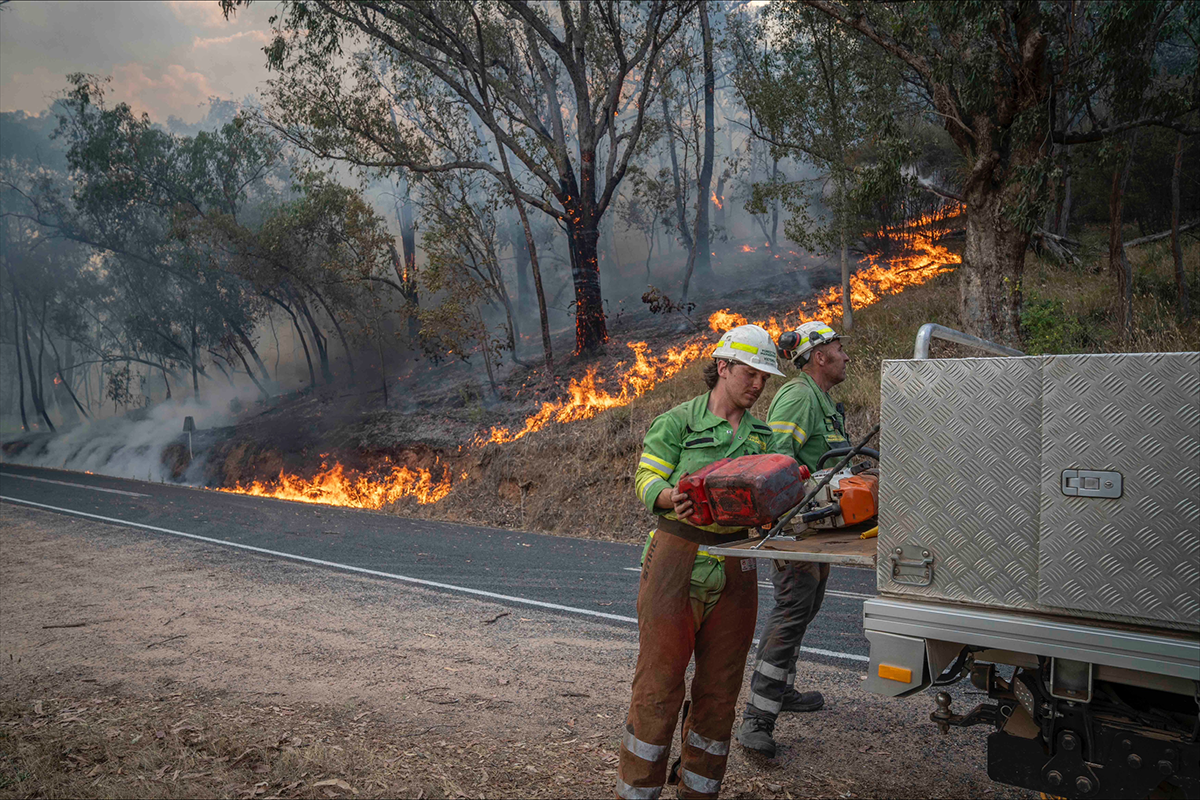
Caption: Agencies work tirelessly on the ground in Walwa, Victoria in bushfire suppression operations.
Source: Forest Fire Management Victoria
Deployments in Victoria are ongoing at this point in time. At time of writing, there are 342 interstate support personnel active in Victoria:
- 31 personnel from ACT
- 127 personnel from NSW
- 34 personnel from NT
- 12 personnel from Queensland
- 100 personnel from SA
- 38 personnel from WA.
As we await the outcome of the next spike in extreme heat and fire danger, deployments of resources from New Zealand and Canada are being coordinated so local emergency service crews in Victoria remain supported as other states and territories experience heightened risk.
Australia has long standing relationships with its international counterparts. Australasian emergency service authorities have assisted Canada over the last 3 years sending 1,410 personnel during their wildfire seasons, and we are grateful the Canadian teams are available to reciprocate the support.
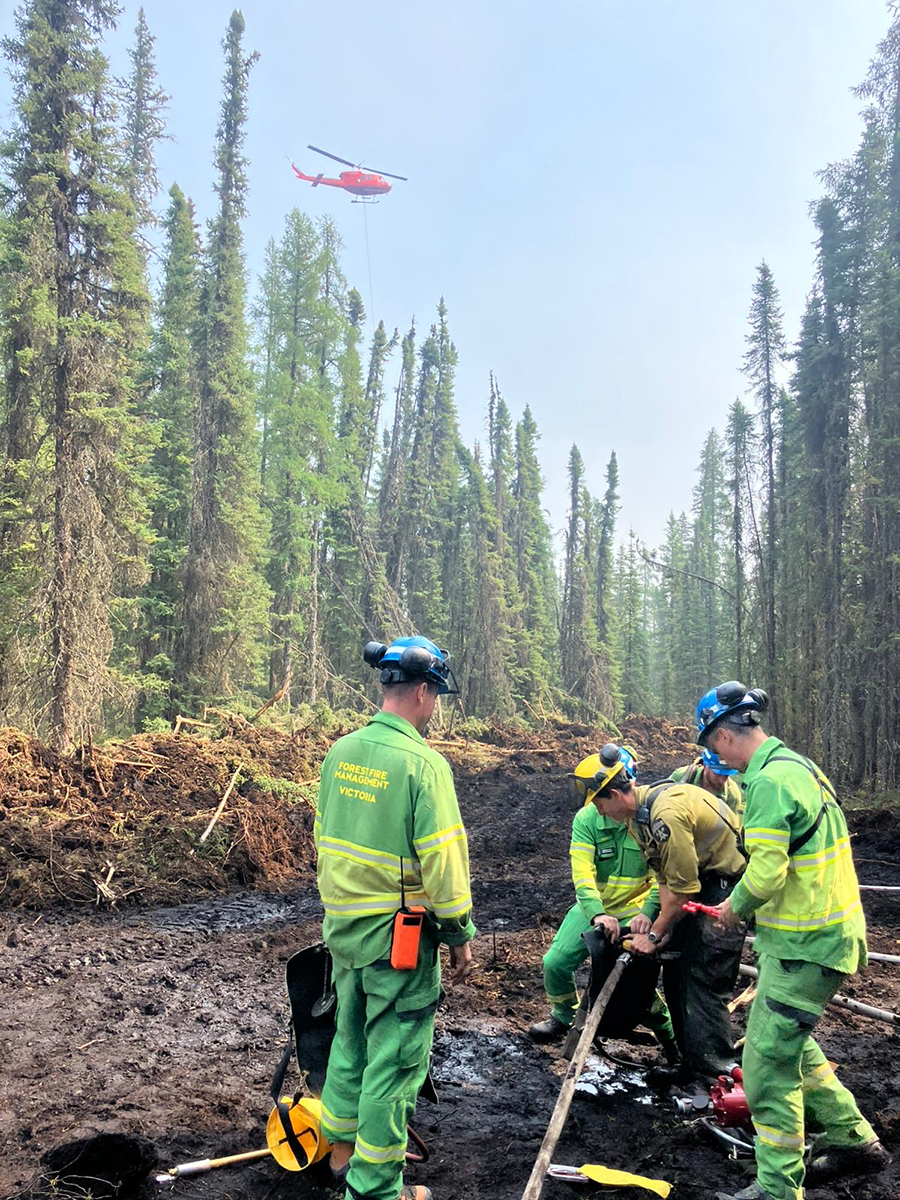
Caption: Australian crews working to protect communities through Canada’s challenging wildfire season in 2025.
Source: Kelly Rash, Forest Fire Management Victoria
The National Aerial Firefighting Assets have been deployed to other parts of the country as they too experience dangerous weather conditions. On 2 occasions SA received assistance from a Black Hawk helicopter whilst the Sikorsky helicopter was deployed to NSW twice as part of the state’s aerial firefighting and emergency response capabilities.
The AFAC NRSC would like to thank the ongoing support from fire and emergency service organisations across Australia, and we look forward to welcoming crews from New Zealand and Canada.
About the AFAC National Resource Sharing Centre
The AFAC National Resource Sharing Centre (NRSC) coordinates and facilitates international and interstate deployments through its established partnerships and national arrangements as authorised by the Commissioners and Chief Officers Strategic Committee. The AFAC NRSC is recognised as an enabler of national capability for fire and emergency services.
The AFAC NSRC enhances the efficiency of resource deployments to an interstate or international natural hazard emergency event. Through its creation of partnerships and agreements, national resourcing capability is deployable through a collaborative operating model.