
National Hydrogen Strategy
Australia's National Hydrogen Strategy outlines a national commitment to developing Australia's hydrogen industry to secure a greener future. Australia does not currently have a nationally consistent strategy for responding to hydrogen related disasters, a gap which needs to be addressed before hydrogen technology can be integrated into homes and public infrastructure.
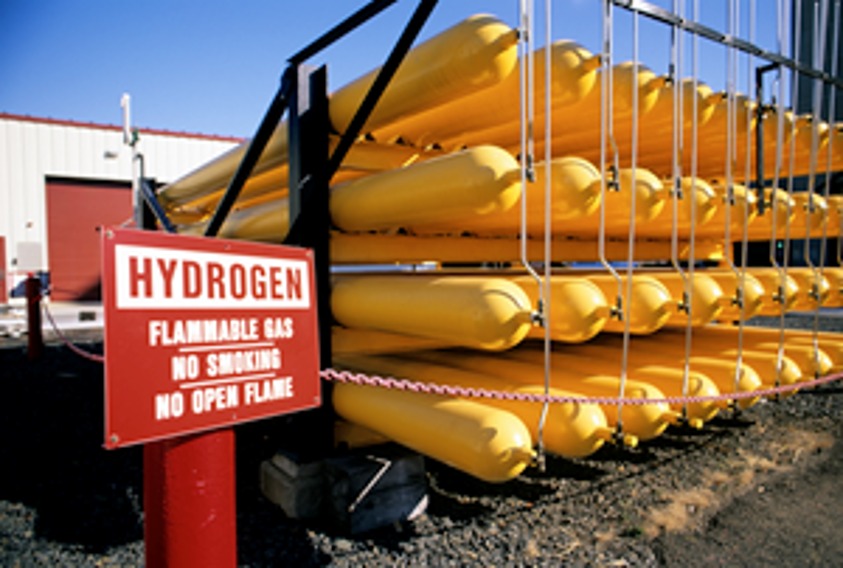
Australia's National Hydrogen Strategy outlines a national commitment to developing Australia's hydrogen industry to secure a greener future. Australia does not currently have a nationally consistent strategy for responding to hydrogen related disasters, a gap which needs to be addressed before hydrogen technology can be integrated into homes and public infrastructure.
In response, AFAC was commissioned by the Australian Government Department of Industry, Energy and resources (DISER) and the South Australian Government to deliver a three-phase initiative to develop a nationally consistent hydrogen training framework for emergency first responders.
In 2021 AFAC formed the National Hydrogen Working Group (NHWG), made up of members of industry, emergency services and academia. The group analysed the training needs of emergency service workers in managing emergency response to incidents involving hydrogen, and developed an Emergency Responders Training Analysis. The following outcomes are a result of this training analysis.
Phase 1 (completed in 2022) analysed existing commercially available hydrogen training to identify current capability and training gaps.
Phase 2 (completed in 2023) commissioned by the South Australian Government on behalf of all state, territory, and federal jurisdictions, delivered a national training model and implementation framework to ensure Australia’s first responders are equipped to address emerging hydrogen-related risks.
The development of the inaugural hydrogen training was an action under the National Hydrogen Strategy (Action 5.8). South Australia led this work nationally, commissioning AFAC to assess first responder training needs for hydrogen incidents. This multi-year effort was funded through the Energy and Climate Special Account (ESCA), with contributions from the commonwealth, states, and territories.
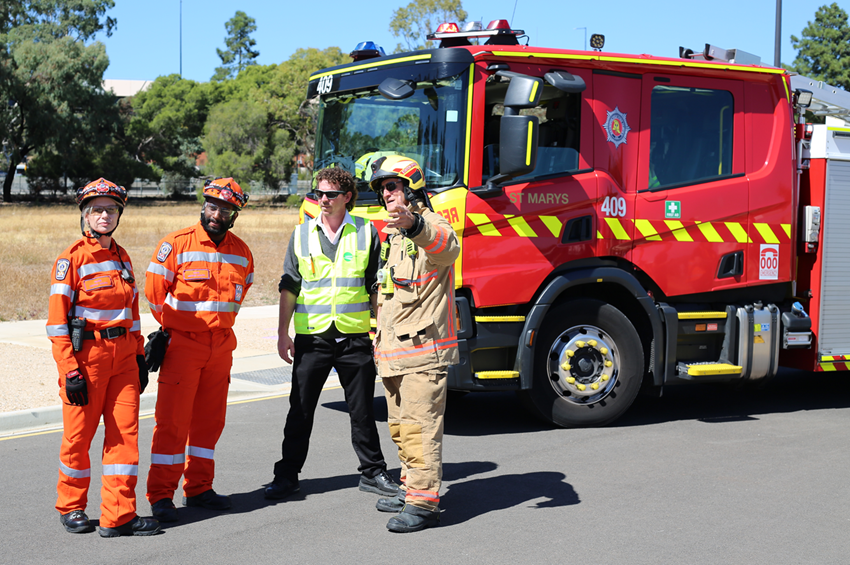
Phase 3 (completed in May 2024) resulted in Australia’s first national Hydrogen Safety Awareness Training Course, developed by AFAC in partnership with Deakin University, emergency management agencies, academic specialists, and hydrogen industry experts. The course supported both online and face-to-face delivery. More than 5,000 first responders have enrolled, with 2025 participation data to be confirmed in early 2026.
An updated National Hydrogen Strategy was released by the Commonwealth in 2024, reaffirming Australia’s commitment to a safe, capable, and hydrogen-ready workforce.
In November 2024, DEECA approached AFAC to deliver Phase 4 of the national hydrogen training initiative in line with the National Hydrogen Strategy (2024), which identifies the need for a highly skilled, ‘hydrogen-ready’ workforce to support Australia’s competitive position in the global hydrogen economy and highlights previous investments made with AFAC to develop and pilot training for critical-incident first responders.
Phase 4 (completed in March 2026) expands on earlier work by developing advanced hydrogen training to address operational needs arising from new energy technologies across Australia’s emergency response landscape. Victoria has led Phase 4 on behalf of the Commonwealth Department of Climate Change, Energy, the Environment and Water (DCCEEW) as part of the Strategy’s mandated actions.
The result is an Advanced Hydrogen for Emergency Responders training course which has been designed and developed by AFAC in partnership with Deakin University.
National collaboration
The National Hydrogen Strategy is being developed by AFAC in collaboration with:
- Queensland Fire and Emergency Services
- South Australian Country Fire Service
- Fire and Rescue New South Wales
- Deakin University
- New South Wales TAFE
- Australian Hydrogen Council
- CSIRO
- Australian Government
Images: Deakin University