AFAC online electric vehicle training continues
Since the online training program launched on 24 June 2025, over 12,000 emergency response personnel have taken the opportunity to expand their skills and knowledge in managing incidents involving electric vehicles. Work is underway to ensure this training will be available for up to a further 12 months.
In 2024, AFAC was awarded the tender to produce the first nationally consistent foundation level training to support emergency response personnel manage incidents involving Electric Vehicles (EV), by the Department of Climate Change Energy, Environment and Water (DCCEEW). AFAC member agencies supported this initiative, providing subject matter experts from within their ranks to review national and international research, processes and practices.
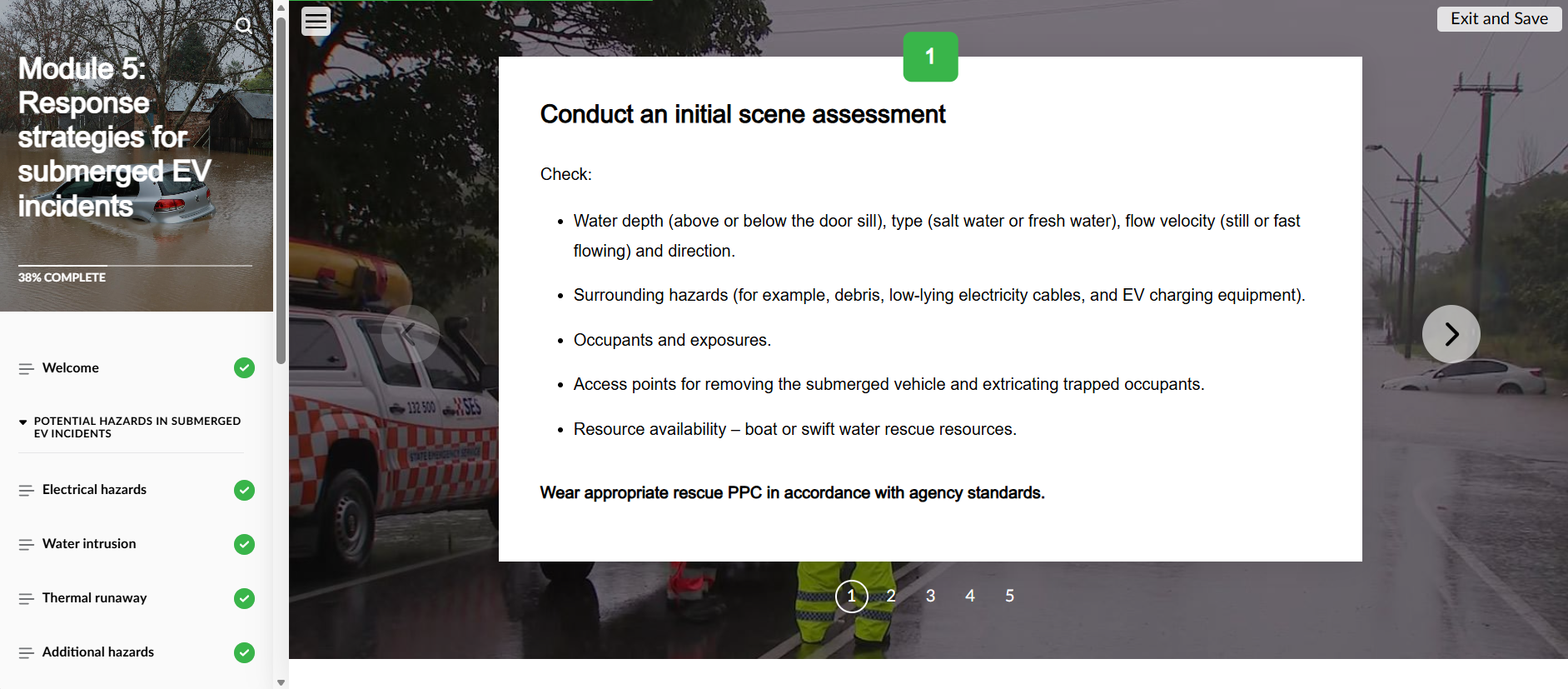
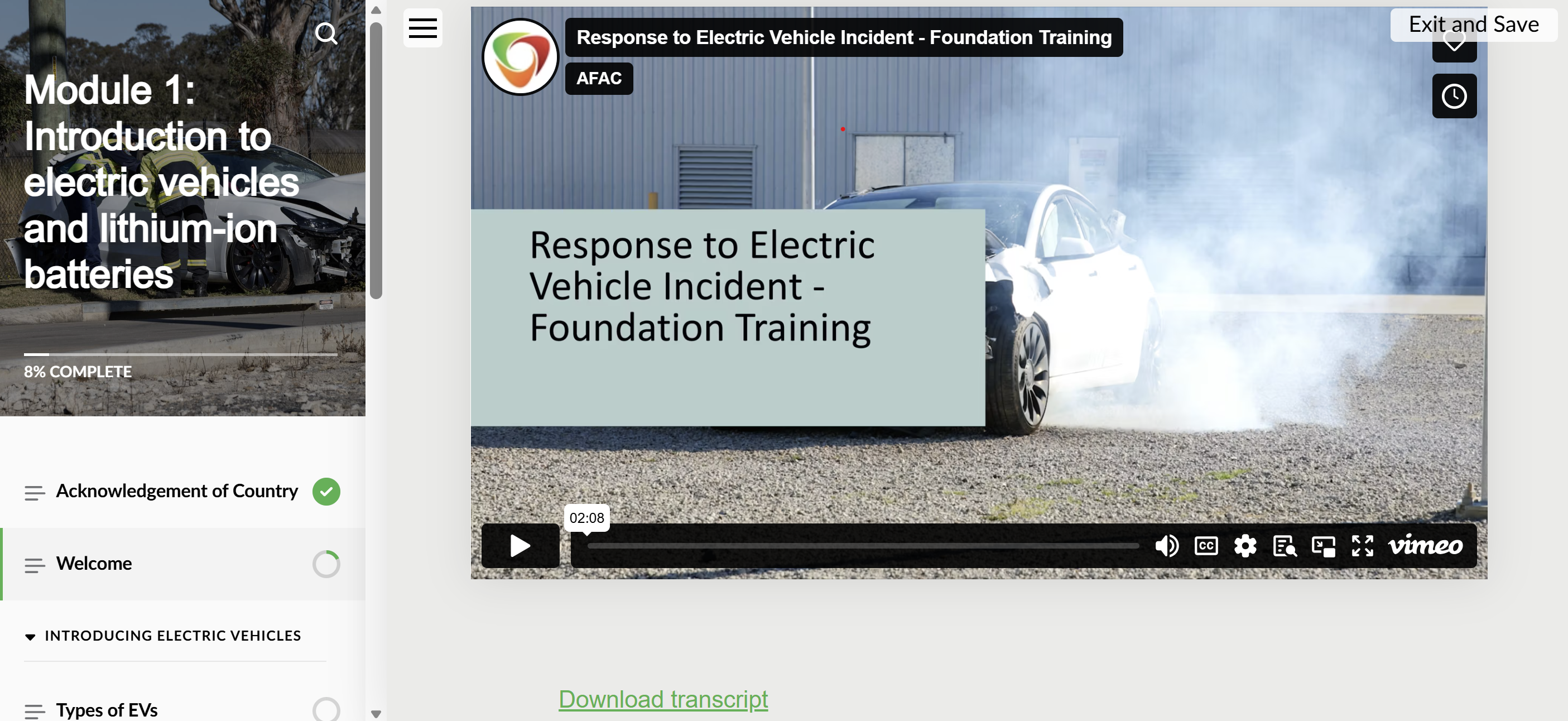
The outcome is the Response to Electric Vehicle Incident – Foundation Training course which is currently hosted on the AFAC website and through some agency learning management systems. As the project draws to a close, AFAC is proud to announce that in the 151 days that the program has been available (at time of writing), 12,364 members have enrolled and 4,607 have completed the training.
The feedback has been extremely positive, and members have reported a significant increase in their level of confidence in managing the risks and hazards related to the high-voltage lithium-ion batteries in an EV incident.
Due to the success of the project and the high level of interest by emergency response personnel around Australia, DCCEEW is actively working with AFAC to provide additional support to extend the availability of the training for up to a further 12 months. This will ensure that those members currently enrolled can complete the training, and those members who have not yet had an opportunity, can still benefit from this valuable resource.
AFAC is grateful to DCCEEW for the ongoing support of this initiative, to the agencies for sharing the expertise provided by the subject matter experts working group, international collaborators, and the support of the Chiefs and Commissioners who promoted this opportunity to their members.